domingo, 8 de junio de 2014

Typical food of India..
 A typical Indian meal combines salty, sweet, creamy, spicy, hot and pungent flavors. The basic menu usually comprises starch, a meat or fish main dish, vegetables, and chutney. Traditionally, Indian flatbread or basmati rice complements the other dishes to highlight a balanced spectrum of flavors. Many regional specialties are enjoyed throughout India, and worldwide
INDIAN GEOGRAPHY
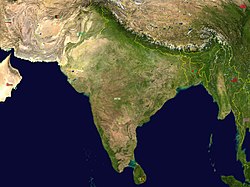
The geography of India describes the geographic features of India, a country in South Asia. India lies largely on the Indian Plate, the northern portion of the Indo-Australian Plate, whose continental crust forms the Indian subcontinent. The country is situated north of the equator between 8°4' and 37°6' north latitude and 68°7' and 97°25' east longitude. It is the seventh-largest country in the world, with a total area of 3,166,414 square kilometres (1,222,559 sq mi). India measures 3,214 km (1,997 mi) from north to south and 2,933 km (1,822 mi) from east to west. It has a land frontier of 15,200 km (9,445 mi) and a coastline of 7,517 km (4,671 mi).
On the south, India projects into and is bounded by the Indian Ocean – in particular, by the Arabian Sea on the southwest, the Laccadive Sea to the south, and the Bay of Bengal on the southeast. The Palk Strait and Gulf of Mannar separate India from Sri Lanka to its immediate southeast, and the Maldives are some 400 kilometres (250 mi) to the southwest. India's Andaman and Nicobar Islands, some 1,200 kilometres (750 mi) southeast of the mainland, share maritime borders with Burma, Thailand and Indonesia. Kanyakumari at 8°4′41″N and 77°32′28″E is the southernmost tip of the Indian mainland, while the southernmost point in India is Indira Point on Great Nicobar Island.[4] India's territorial waters extend into the sea to a distance of 12 nautical miles (13.8 mi; 22.2 km) from the coast baseline.
The northern frontiers of India are defined largely by the Himalayan mountain range, where the country borders China, Bhutan, and Nepal. Its western border with Pakistan lies in the Punjab Plain and the Thar Desert. In the far northeast, the Chin Hills and Kachin Hills, deeply forested mountainous regions, separate India from Burma. On the east, its border with Bangladesh is largely defined by the Khasi Hills and Mizo Hills, and the watershed region of the Indo-Gangetic Plain.
The Ganges is the longest river originating in India. The Ganges–Brahmaputra system occupies most of northern, central, and eastern India, while the Deccan Plateau occupies most of southern India. Kangchenjunga, on the border between Nepal and the Indian state of Sikkim, is the highest point in India at 8,598 m (28,209 ft) and the world's 3rd highest peak. Climate across India ranges from equatorial in the far south, to alpine and tundra in the upper reaches of the Himalayas.
Posted by Juan Pablo Dircio
Let me introduce you to a Wonderful place... INDIA!
So far as I am able to judge, nothing has been left undone, either by man or nature, to make India the most extraordinary country that the sun visits on his rounds. Nothing seems to have been forgotten, nothing overlooked.

Flag, Culture
India is the world's second most populous nation (after China).India is a land of great cultural diversity, as is evidenced by the enormous number of different languages spoken throughout the country. Although Hindi (spoken in the north) and English (the language of politics and commerce) are used officially, more than 1,500 languages and dialects are spoken.
Symbolism:The national flag, which was adopted in 1947, is a tricolor of deep saffron, white, and green, in horizontal bands (with green at the bottom). In the center of the white band is a blue wheel, the chakra , which also appears on the lion column-capital of the Emperor Asoka at Sarnath. This carving, which is over 2,200 years old, is also a national emblem that is preserved in the Sarnath Museum. The sandstone carving features four lions back to back, separated by wheels ( chakra , the wheel of law), standing over a bell-shaped lotus. The whole carving once was surmounted by the wheel of law. The national anthem is a song composed by Rabindranath Tagore in 1911 entitled Jana-gana mana.
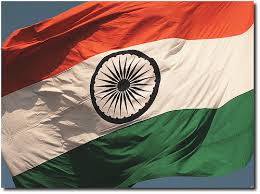
Symbolism:The national flag, which was adopted in 1947, is a tricolor of deep saffron, white, and green, in horizontal bands (with green at the bottom). In the center of the white band is a blue wheel, the chakra , which also appears on the lion column-capital of the Emperor Asoka at Sarnath. This carving, which is over 2,200 years old, is also a national emblem that is preserved in the Sarnath Museum. The sandstone carving features four lions back to back, separated by wheels ( chakra , the wheel of law), standing over a bell-shaped lotus. The whole carving once was surmounted by the wheel of law. The national anthem is a song composed by Rabindranath Tagore in 1911 entitled Jana-gana mana.
By: Alexi
sábado, 7 de junio de 2014
Indian Cassical Dances
Dance is an ancient and celebrated cultural tradition in India. Folk dances abound all across the country, and huge crowds of people can be found dancing at festivals and weddings. Dance and song features heavily in Indian cinema (so-called “Bollywood” films), too. But where does Indian dance draw its roots from? Here are six of the most important classical dance forms of India.
Bharatanatyam
Bharatanatyam is a dance of Tamil Nadu in southern India. It traces its origins back to the Natyashastra, an ancient treatise on theatre written by the mythic priest Bharata. Originally a temple dance for women, bharatanatyam often is used to express Hindu religious stories and devotions. It was not commonly seen on the public stage until the 20th century. The dance movements are characterized by bent legs, while feet keep rhythm. Hands may be used in a series of mudras, or symbolic hand gestures, to tell a story.
Kathakali
Kathakali comes from southwestern India, around the state of Kerala. Like bharatanatyam, kathakali is a religious dance.Kathakali is a group presentation, in which dancers take various roles in performances traditionally based on themes from Hindu mythology, especially the two epics, the Ramayana and the Mahabharata. Kathakali is traditionally performed by boys and men, even for female roles. The costumes and makeup are especially elaborate, with faces made to look like painted masks and enormous headdresses.

Kathak
A dance of northern India, Kathak is often a dance of love. It is performed by both men and women. The movements include intricate footwork accented by bells worn around the ankles and stylized gestures adapted from normal body language. It was originated by Kathakas, professional storytellers who used a mixture of dance, song, and drama. Like other Indian dances it began as a temple dance, but soon moved into the courts of ruling houses.
Manipuri
Manipuri comes from Manipur in northeastern India. It has its roots in that state’s folk traditions and rituals, and often depicts scenes from the life of the god Krishna. Unlike some of the other, more rhythmic dances, Manipuri is characterized by smooth and graceful movements. Female roles are especially fluid in the arms and hands, while male roles tend to have more forceful movements. The dance may be accompanied by narrative chanting and choral singing.
Kuchipudi
Unlike the other styles mentioned, kuchipudi requires talent in both dancing and singing. This dance, from the state of Andhra Pradesh in southeastern India, is highly ritualized, with a formalized song-and-dance introduction, sprinkling of holy water, and burning of incense, along with invocations of goddesses. Traditionally the dance was performed by men, even the female roles, although now it is predominantly performed by women.
Odissi is indigenous to Orissa in eastern India. It is predominantly a dance for women, with postures that replicate those found in temple sculptures. Based on archaeological findings, odissi is belived to be the oldest of the surviving Indian classical dances. Odissi is a very complex and expressive dance, with over fifty mudras (symbolic hand gestures) commonly used.
Sattriya
Sattras are the Vaishnava monasteries in Assam. The saint poet Shankar Deva of the 15th century AD started this institution to bring harmony to the region of Assam through religion, creating forms of dance-dramas, music, painting and collective prayer. The dance forms which have come to stay are called Sattriya dances, sharing all the characteristics of a classical dance form.
As a living tradition these dances are performed in the namghar, the prayer hall of the sattra by the celibate monks. Dressed in white costumes and turbans, head gears, they include kho lplaying, performing dance, creating soundscapes, floor patterns and choreographic designs. The numbers like “Sutradhari,” “Chali,” “Jhumura” partake of nritta, pure dance, nritya, expressional dance and dance-drama elements. The music is provided by khol-drum, patital, boratal-cymbals along with songs. The repertoire of Sattriya is vast. Now young female dancers also study these dances and they have come out of the sattra. They are presented on the metropolitan stages, with typical music of Assam, costumes and literary compositions viz borgeet. Both solo and group numbers enrich its presentation
By: Cinthya B.
Tired of going to the same parties and eating the same food?? Well Come and take a look to Famous food and festivals in India!!!
It is said that in India, a festival is celebrated every day of the year. Festivals serve to unite people from different backgrounds in celebration and understanding. The majority of festivals observed in India are associated with particular cuisines. Traditional recipes handed down over the years are enjoyed all over the country.
Pongal
A very important Tamilian festival in India is known as Pongal, which means "boiling over." Pongal celebrates the harvest. Indra, the sun god, is given thanks for providing rain and a good crop. Pongal is celebrated on January 14 of each year. Originally the festival lasted four days; however, in recent times the people of India have restricted festivities to two days. Each day of Pongal denotes a different type of food. The food for the first day is rice eaten with fried chickpea patties, known as vadai, and sweet pancakes called poli. Meals are eaten with family members on the first day; friends and neighbors are included on the second day. On the second day, the women of the house are responsible for cooking. Venpongal, a salty combination of steamed rice and dal, is eaten along with chakkarainpongol, a sweet dish made from jaggery and ghee.
Holi
The festival of colors, Holi, is a large festival celebrated in India. During the festival, men, women and children dance around together and rub gulaal (powdered color) over one another. Bhang is an alcoholic drink made with rosewater and dried fruits that is closely associated with Holi. Families offer it to all visitors. Kanji-ke-bare are thin lentil patties special to Holi, as is as papri, an unleavened bread. Sweet dumplings filled with khoya and dried fruits called gujjias are served as a dessert.
Durga Puja
A large Bengali festival known as Durga Puja celebrating Shakti, the mother goddess, lasts for more than a week; people start preparing for Durga Puja about one month before the event. Bohg, a proper meal, is offered every day during the week of the puja. Parts of the meal include moong dal khichdi, a mixture of dal and rice; charachari, a concoction of vegetables; tomato chutney; and payesh, an Indian rice pudding.
Diwali
Diwali, the festival of lights, is a festival even the poorest families in India celebrate, hanging diyas, or lamps, around their homes. Sweets are emphasized during Diwali celebrations. Candies and desserts come in many shapes, sizes and flavors; families are proud to serve treats different from the norm. It is common to see children eating toys made from candy. Rice, whole green lentils and a sweet sauce called mandhi are also eaten at this time.
By: Alexi
Indian Religions, where people live in harmony
India is a land of diversities. This diversity is also visible in the spheres of religion. The major religions of India are Hinduism (majority religion), Islam (largest minority religion), Sikhism, Christianity, Buddhism, Jainism, Zoroastrianism, Judaism and the Bahá'í Faith. India is a land where people of different religions and cultures live in harmony. This harmony is seen in the celebration of festivals. The message of love and brotherhood is expressed by all the religions and cultures of India.

Buddhism
At present Buddhism is one of the major world religions. The philosophy of Buddhism is based on the teachings of Lord Buddha, Siddhartha Gautama (563 and 483 BC), a royal prince of Kapilvastu, India. After originating in India, Buddhism spread throughout the Central Asia, Sri Lanka, Tibet, Southeast Asia, as well as the East Asian countries of China, Mongolia, Korea, Japan and Vietnam.Christians
Christianity is one of the prominent religions in India. At present there are about 25 million Christians in India. It is interesting to note that the Christian population in India is more than the entire population of Australia and New Zealand or total population of a number of countries in Europe.Hinduism
Hinduism is the oldest religion in the world. Hinduism is world's third largest religion after Christianity and Islam. Hinduism is the dominant religion in India, where Hindus form about 84 per cent of the total population. Hinduism is also known as "Sanatan Dharma" or the everlasting religion.Islam
One of the prominent religions of India, Islam forms about 12 per cent of India's population. Though India's contact with Islam had begun much earlier, the real push came in the 8th century when the province of Sindh was conquered. Though the Muslims form only 12 per cent of the total population of India but the influence of Islam on Indian society is much stronger.Jainism
Jains form less than one percent of the Indian population. For centuries, Jains are famous as community of traders and merchants. The states of Gujarat and Rajasthan have the highest concentration of Jain population in India. The Jain religion is traced to Vardhamana Mahavira (The Great Hero 599-527 B.C.).Sikhism
Sikhs form about 2 per cent of Indian population. In comparison to other religions, Sikhism is a younger religion. The word 'Sikh' means a disciple and thus Sikhism is essentially the path of discipleship. The true Sikh remains unattached to worldly things.
By: Kevin Shai
Suscribirse a:
Entradas (Atom)